


The label on a baby outfit can tell you less than its coverage. A babygrow usually means a one-piece with full-length legs, often with feet, while a romper commonly has shorter legs and leaves the lower legs uncovered. UK retailers sometimes use the names differently, so a product photo may look appealing but still leave you wondering how much coverage it offers or how straightforward it will be to change your baby.
If you’re weighing up the two, the most useful choice isn’t always about finding the “right” label. It’s about matching coverage, fabric and fastening to your baby’s routine and the conditions. This guide explains the common UK meaning of babygrow, compares babygrows and rompers by fit, coverage and changing ease, and looks at when each may suit home, outings or warmer days. You’ll also find practical details to check on product pages, so you can choose a comfortable, versatile piece without adding unnecessary clothes to the drawer.
Key Takeaways
- UK retailers may use “babygrow” differently, so check the garment’s details rather than relying on its label.
- Compare leg and foot coverage to work out what layering and outfit styling may suit your baby’s day.
- A babygrow or romper isn’t automatically more practical. Consider whether you’re dressing for home, an outing or changing conditions.
- Choose by intended use, coverage, fabric and care instructions, then check the size chart and garment measurements as well as your baby’s age.
- Explore The bonniemob’s organic cotton knitted bubble rompers, playsuits, sleepsuits and bodysuits as you consider different one-piece options.
What does babygrow mean, and how is it worn?
In UK shopping, a babygrow usually refers to a one-piece baby garment with a body and legs, often with long sleeves and covered feet. The name isn’t used consistently, though. One retailer may call a garment a sleepsuit, while another may describe a similar design differently. The Babygrow entry offers a broad explanation of the term, but the details of an individual garment depend on its design.
Babygrows are commonly worn as a single layer or with other suitable clothing, depending on the garment and the day. Sleeve length, leg coverage, fabric and fastening all affect how a piece fits into your baby’s routine. Check the maker’s product information for guidance on intended use and care rather than assuming every style is designed for the same setting.
That variation is why parents often compare babygrows with rompers when organising an everyday wardrobe. A retailer’s label may not tell you whether a garment has full-length legs, leaves the feet uncovered or is styled more like an outfit. Read the description and look at the photographs, then consider whether the actual design suits the occasions you have in mind.
Is a babygrow the same as a sleepsuit?
The terms can overlap in UK retail descriptions. Both are often used for one-piece garments with substantial body and leg coverage, but the name alone doesn’t confirm the exact cut. Feet may be covered or left bare, and fastenings can differ. Check those details on the product page so you know what you’re choosing and whether you may want to add a separate layer.
What details help identify a babygrow?
Start with the garment itself: check whether it has short or long sleeves, full or shorter legs, covered feet, and how it fastens. Naming conventions can vary between retailers and product ranges, so treat “babygrow” as a useful clue rather than a complete specification.
For example, a listing might use “sleepsuit” in its title, while its description shows a one-piece with long sleeves and enclosed feet. Another garment with the same broad label might leave the feet uncovered. Reading the details alongside the photographs gives you a clearer picture than relying on the name alone.
Babygrow vs romper: how their everyday designs differ
Coverage is often the clearest difference between these one-piece styles. A babygrow commonly has longer legs and may cover the feet, while a romper often has shorter legs and leaves the lower legs bare. These are general patterns, not fixed rules. Sleeves, shape and finish vary from one garment to another, and the overall silhouette can range from a cosy all-in-one look to a more outfit-like style.
Think about what the garment will be worn with. A piece with longer legs or covered feet may suit a routine where you want more coverage, while shorter legs leave room to add separate layers if needed. A romper might be worn on its own or over another layer, depending on its design and the conditions. Check fabric, sleeve length and leg length together. A label or photograph alone can’t tell you exactly how warm a garment will feel.
Coverage and layering: what changes between the styles?
Look at the whole outfit, not just the one-piece. Uncovered feet, for instance, leave room for separate socks, whereas an enclosed-foot design covers them as part of the garment. A sleeveless romper may be layered over another top, while a long-sleeved version offers a different amount of coverage. Check the product description to confirm the design and whether any pictured layers are included.
Fastenings and changing: which details matter?
Fastenings may sit along the front, down the legs or elsewhere, depending on the style. Their placement affects how the garment opens during a change, but no one layout is automatically easiest for every family. Check the product photographs and description for the closure and how far it opens, then consider what feels manageable in your everyday routine.
| Feature | Babygrow | Romper | What to check |
|---|---|---|---|
| Coverage | Often longer legs; feet may be covered | Often shorter legs; feet usually uncovered | Actual sleeve, leg and foot coverage |
| Silhouette | Often reads as an all-in-one layer | May have a more outfit-like appearance | Cut and intended styling |
| Layering | Coverage can affect what you add underneath or over it | May be worn alone or layered | Fabric weight and the day’s conditions |
| Fastening | Varies by garment | Varies by garment | Closure position and opening shown |
For a romper-style option, browse organic cotton knitted bubble rompers from The bonniemob and compare their garment details with the features that suit your plans.
Which is more practical: a babygrow or a romper?
Neither is automatically the more practical choice. What works best depends on your baby’s routine, the garment’s design and the conditions it’ll be worn in. A more covered one-piece may suit a day when you want full-length legs, while a romper can make a simple daytime outfit or work as one layer among several. The useful question isn’t which label wins, but which details fit the day ahead.
When might a babygrow suit the day ahead?
If you prefer a one-piece with fuller leg coverage, a babygrow may be worth considering for time at home or a day with changing temperatures. Check whether its feet are covered, then consider the room temperature and any layers you plan to use. For sleepwear choices, follow current official UK safe-sleep guidance and check that the particular garment is intended for the use you have in mind.
When might a romper feel like the better choice?
A romper can make a simple daytime outfit without needing separate top and bottom pieces. Depending on its cut, it may be worn on its own or layered with other clothing. A knitted bubble romper is one romper style, with its own design and coverage, rather than simply another name for a babygrow. To explore what to look for in this style, see an organic cotton baby romper buying guide.
For an outing, consider whether the garment’s coverage suits the conditions and whether you’ll want to add or remove a layer. At home, you might favour the cut that fits your usual changing routine. No single style promises an easier day for every family, so compare the actual construction, fabric and fastenings before deciding.
| Routine | Details worth checking |
|---|---|
| Relaxing at home | Leg and foot coverage, fabric and the room temperature |
| Going out | How the garment works with any layers you plan to bring |
| Dressing in layers | Sleeve length, fit and whether the piece can be worn with other clothing |
| Changing during the day | Fastening position and how the garment opens |
A little forward planning can help: picture the outing or home routine, then check the product details against it. Comfort, coverage and convenience come from the whole design, not the name on the label.
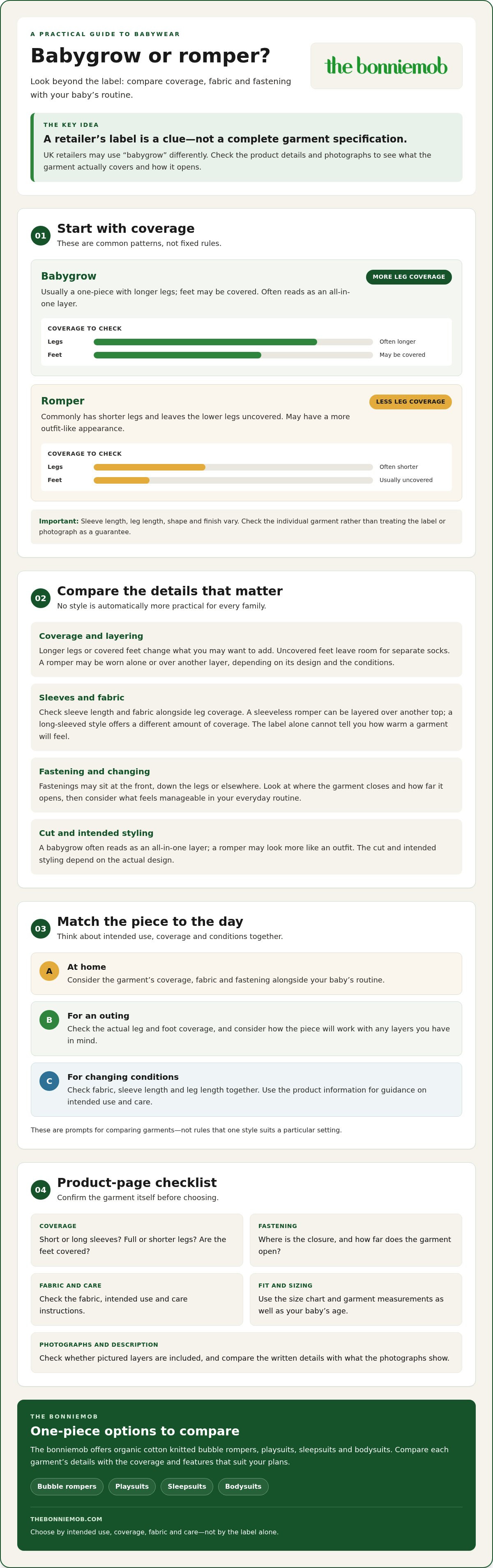
How to choose the right one-piece outfit for your baby
Choose by working through the details in order: what the outfit is for, how much coverage you want, which fabric suits the conditions, how the garment should fit, and how it needs to be cared for. This keeps the decision centred on your baby’s day rather than on a label alone.
- Start with intended use. Think about whether the outfit is for time at home, an outing or wearing with other layers.
- Check coverage. Look at sleeves, leg length and whether the feet are covered, then consider the indoor temperature and season.
- Read the fabric description. Compare the stated material and weight with how and when you plan to use the garment.
- Check fit and care. Use the size chart and garment measurements, and read the product’s care instructions before choosing.
Check fit, sizing and room to move
Age labels are a starting point, not a substitute for the brand’s size chart. Compare the chart with your baby’s current measurements, and look for notes about the garment’s shape, stretch or intended fit. Babies grow at different rates, and families may prefer different amounts of room. For a babygrow or romper, check the stated measurements rather than sizing up or down by age alone.
A garment should suit the way your baby moves and the layers you plan to use with it. Product details can help you understand the intended shape, but don’t assume sizing or fit is identical across brands. If your baby’s measurements fall between sizes, use the retailer’s own guidance to make your choice.
Choose fabric and care for everyday wear
Fabric descriptions can help you compare material and weight, while sleeve and leg coverage offer further clues about how a piece may work across the seasons. For cooler conditions, consider whether you’ll add a layer. In warmer indoor conditions, think about the overall coverage. The garment’s design and the room it’ll be worn in both matter.
Care instructions are part of the choice, too. Check the label or product page for washing and drying guidance, especially if you’re building a small, versatile wardrobe and want to know what everyday care involves. Follow the instructions for each garment rather than assuming similar-looking fabrics should be treated alike.
Once you’ve considered use, coverage, fabric, fit and care, explore organic cotton knitted bubble rompers as one thoughtfully designed option for a romper-style outfit.
Explore thoughtfully designed babywear from The bonniemob
Now that you’ve considered coverage, fit and everyday use, compare those needs with the garments themselves. The bonniemob’s babywear includes organic cotton knitted bubble rompers, playsuits, sleepsuits and bodysuits. These are distinct options within a wardrobe, and the name alone won’t tell you whether a particular piece has the coverage, shape or fastening you’re looking for.
The collections are designed in the UK by knitwear designer Tracey Samuel. As you browse, check each item’s product information. Materials and details can vary between garments, so look for the stated fabric, fit, fastening and care instructions on the individual page rather than assuming they’re the same across the range.
What can you explore across the babywear range?
An organic cotton knitted bubble romper may suit you if you’re drawn to a romper-style outfit. Playsuits, sleepsuits and bodysuits offer other forms to compare. Consider what each piece is intended for, how much of your baby it covers and how it might work with the layers you already use. Read the specific material and care details before deciding whether it suits your plans.
If you’d like to look more closely at romper features, the Organic Cotton Baby Romper buying guide can help you think through the details that matter, from intended use to fit. Pair that information with the measurements and product guidance for any garment you’re considering.
Where to go next after comparing babygrows and rompers
A babygrow label or a romper’s styling is a starting point, not the whole decision. Revisit what your routine calls for: fuller or lighter coverage, a particular fabric, and a fit that works for your baby. There’s no single right choice for every family. The most useful option is the one whose details suit your needs.
Take a look through The bonniemob babywear range and compare the garment descriptions at your own pace. Choose the piece whose details fit your baby and the day you have in mind.
Choose the piece that fits your baby’s day
The name on a label is only a starting point. Babygrows and rompers can vary in coverage, fastening and fit, so check the garment details and consider your baby’s routine, the season and any layers you may need. The most practical choice is the one that suits your family, not a style that works the same way for everyone.
The bonniemob’s babywear is designed in the UK by knitwear designer Tracey Samuel. The range includes organic cotton knitted bubble rompers, playsuits, sleepsuits and bodysuits. Explore each garment’s material, fit and care information as you compare styles for your little one.
Explore The bonniemob’s babywear range and compare the product details to find a piece that suits the day ahead.
Frequently Asked Questions
What is a babygrow in the UK?
In the UK, a babygrow usually means a one-piece baby garment with a body and legs, often with sleeves and sometimes covered feet. It’s commonly worn as an everyday layer, though the exact design and intended use vary. Retailers may use the name differently, so check the product description and photographs for leg and foot coverage, fastening details and fabric before choosing.
What is the difference between a babygrow and a romper?
A babygrow often has longer legs and may cover the feet, while a romper commonly has shorter legs that leave the lower legs uncovered. These are typical conventions, not rules for every garment. Rompers are often styled as daytime outfits, but designs vary. Compare the actual sleeve and leg length, fabric, fastening and intended use rather than relying on the product name alone.
Can a baby wear a romper instead of a babygrow?
Yes, a romper can be an alternative for daytime dressing if its coverage and design suit your baby and the conditions. Some rompers can be worn alone, while others may work with layers, depending on their cut and fabric. Check the product details and consider what you’ll need for the day. For sleepwear, follow current official safe-sleep guidance and the garment’s stated intended use.
How do I choose the right size babygrow for my baby?
Use the retailer’s size chart and garment measurements rather than choosing by age alone. Compare the chart with your baby’s current measurements, then read any notes about the garment’s shape, stretch or intended fit. Babies grow at different rates, and sizing can vary between brands. If you’re between sizes, check the retailer’s advice and consider how the garment should fit with any planned layers.
Are organic cotton babygrows better for babies?
Organic cotton may appeal if you’re looking for a garment made from that fibre, but it isn’t automatically the best choice for every baby or situation. Consider the specific garment’s fabric description, construction, fit and intended use, and follow its care instructions. Don’t assume a material guarantees a particular result for your baby’s skin. The bonniemob offers organic cotton knitted bubble rompers, rather than confirmed babygrows.
Can a baby wear a babygrow all year round?
A babygrow can be part of a wardrobe throughout the year, but whether a particular one suits the day depends on its fabric, coverage and the surrounding conditions. Check the room temperature and weather, then consider whether layers are appropriate. Designs vary, so a lighter or more covered style may suit different situations. For sleepwear choices, refer to current official UK safe-sleep guidance.


