


Could the sweetest little label tell you less than you think? Choosing organic baby clothes often starts with a wish for softness and a lighter footprint, but organic and sustainability claims can be difficult to compare. A thoughtful choice means looking beyond the front of the label and checking what the product information actually says.
It’s understandable to want clothes that feel comfortable against your baby’s skin, suit busy everyday routines and might be passed on when they’re outgrown. This guide explains what fibre and certification information can tell you, what to check before buying, and how to choose practical pieces with lasting potential.
We’ll look at terms such as GOTS and OEKO-TEX, how to read fibre composition and care details, and which garment features to consider for your baby’s age and daily dressing needs. With a little label-reading know-how, you can compare options more confidently and choose pieces to wear, wash and perhaps cherish for years to come.
Key Takeaways
- Distinguish organic-fibre claims from broader sustainability language by checking the garment’s product information.
- Assess certification names, what each standard covers and whether the evidence relates to the specific product.
- Remember that the words organic baby clothes don’t establish quality on their own. Check practical details to see whether a garment suits everyday use.
- Choose by intended use, sizing, garment details and clearly stated material information.
- Meet the bonniemob, founded by knitwear designer Tracey Samuel in 2005, with collections designed in the UK.
What Does Organic Baby Clothes Really Mean?
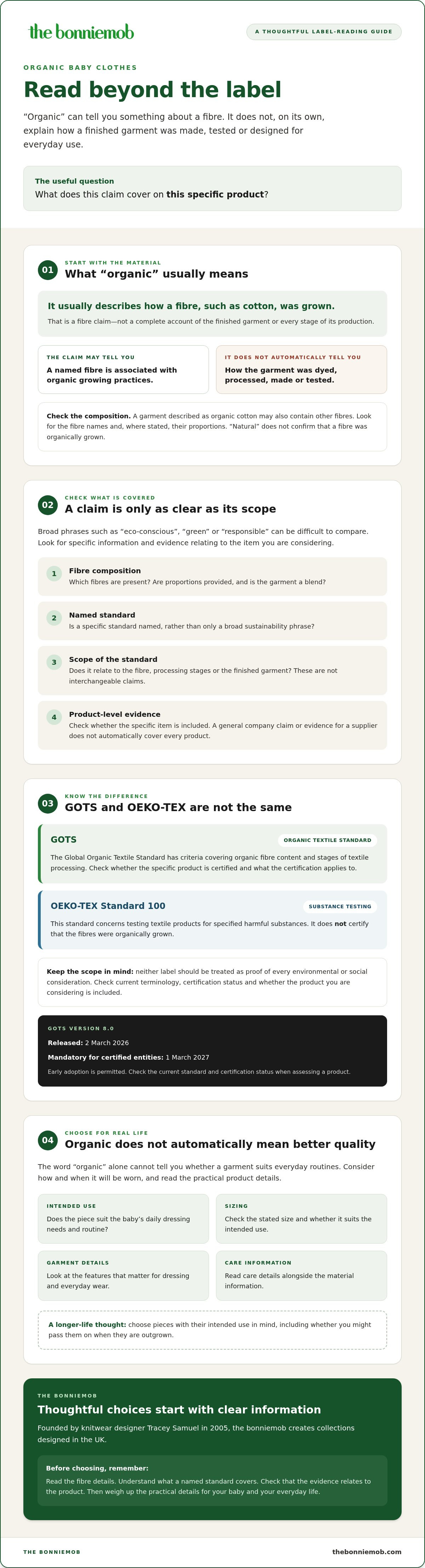
“Organic” usually describes how a fibre, such as cotton, was grown. It isn’t a complete account of how a finished garment was dyed, made or tested, and it doesn’t automatically mean that every part of its production is sustainable. When comparing organic baby clothes, check the fibre composition and the product information to understand what the claim refers to.
A garment described as organic cotton may also contain other fibres. Look for the names and proportions of those fibres in the product details. A natural-fibre description, meanwhile, doesn’t confirm that the fibre was organically grown. Nor can a photograph of a soft-looking romper tell you its composition or how it was made. The written product information is a more useful place to start.
Organic cotton and other natural fibres: what the label tells you
Organic cotton is cotton associated with organic growing practices. That describes the fibre, not every stage that follows. The claim alone doesn’t tell you what dyes were used, how the fabric was processed or whether the finished garment was independently assessed. For background on materials and organic agricultural standards, Wikipedia offers a general overview. You’ll still need to check the relevant information for the specific product you’re considering.
The same care applies to other natural fibres. A garment can contain a natural material without every component or production step meeting an organic standard. Don’t infer details from words such as “natural” or “sustainable” alone. First, check the fibre composition. Then look for an explanation of what any broader claim means and which part of the product or production it describes.
Why wording and evidence matter
Broad wording, such as “eco-conscious” or “made with organic fibres”, gives you less to check than a named standard. Standards can cover particular parts of production, and their certification scope can vary. GOTS, for example, is a named textile standard shoppers may wish to research. Seeing it mentioned in general guidance doesn’t show that a particular garment is certified.
Check whether the specific product is covered, what the standard applies to and whether the seller provides evidence or a certification reference. A certificate for a material, supplier or business doesn’t automatically apply to every finished item. If the wording is unclear, ask the seller what it covers. This isn’t fussy label-reading; it helps you understand what you’re buying and compare claims on a like-for-like basis.
How to Check Organic Baby Clothes Claims and Certifications
A clear claim should help you understand what a garment is made from and what has been checked. Before choosing, use this checklist to separate the material claim from the certification and the item itself:
- Fibre composition: Check which fibres are present and, where stated, their proportions. A description that names only one fibre may not tell you whether the garment is a blend.
- Named standard: Look for the full name of a standard, rather than relying on broad words such as “green” or “responsible”.
- Scope: Find out whether the standard relates to the fibre, processing stages or finished garment. These aren’t interchangeable claims.
- Product-level evidence: Check whether the specific item is covered. Don’t assume a general company claim applies to every product.
What GOTS and other textile standards can indicate
The Global Organic Textile Standard (GOTS) is a certification standard for organic textiles, with criteria covering organic fibre content and stages of textile processing. Its official guidance explains how the certification system works. GOTS Version 8.0 was released on 2 March 2026. It becomes mandatory for certified entities on 1 March 2027, with early adoption permitted. Check the current standard and certification status when assessing a product, as requirements and implementation can change.
OEKO-TEX Standard 100 is different. It concerns testing textile products for specified harmful substances; it doesn’t certify that the fibres were organically grown. Each standard has a defined scope, so neither label should be taken as proof of every environmental or social consideration. For either standard, check the current terminology, what the certification covers and whether the product you’re considering is included.
Questions to ask when a product claim is unclear
Pause over the wording and ask what it refers to. “Organic cotton” describes a fibre claim; it doesn’t automatically confirm how a garment was dyed or made. “Natural” is broader still, and isn’t evidence of organic certification by itself.
- Which material or production stage does the claim cover?
- Is a named standard given, and can I check its scope?
- Does the evidence relate to this particular item?
If those details aren’t clear, it’s reasonable to ask the seller for clarification. You can also browse the bonniemob’s baby clothing and check the fibre and product information provided for each piece.
Does Organic Baby Clothing Automatically Mean Better Quality?
No. An organic-fibre claim tells you something about the material, but it doesn’t establish how well a garment is constructed, how it fits or whether it suits your routine. To assess quality, consider the whole picture: fabric information, seams, fastenings, finish, sizing and intended use.
A certification can help verify defined criteria, but it isn’t a rating of every practical feature. For example, the Global Organic Textile Standard (GOTS) sets requirements for certified organic textiles across specified stages of processing. It doesn’t tell you whether a particular romper will fit your baby comfortably or feel easy to dress in. Consider certification alongside the details of the garment itself.
| What you’re checking | What it can tell you | What to check next |
|---|---|---|
| Fibre claim | The material or blend described for the garment | Read the full composition, not just the headline wording |
| Certification | Whether defined criteria apply within a stated scope | Check the named standard and whether this product is covered |
| Practical details | How the garment is designed for fit and dressing | Review seams, fastenings, finish, sizing and intended use |
Compare the garment, not just the label
Use the product description and photographs together. Check the stated composition, then look at visible seams and fastenings. Clear sizing guidance can help you assess whether a garment may allow room for movement, while fastening details may be relevant during changes. These are useful clues, not guarantees of fit or ease. Give information about the individual item more weight than a general statement about a brand’s range.
When choosing organic baby clothes, the label is only one part of the decision. Take a closer look at the garment and how it’s designed to be worn.
Comfort, wear and longevity without overpromising
Comfort is personal. Babies vary, and fabric feel, fit and movement all play a part, so organic wording alone can’t promise that a piece will suit every child. Consider how often you expect to use it, whether the sizing seems appropriate now and how it will fit into your everyday dressing routine.
If you hope to use a piece often or pass it on, read its care instructions before buying and consider whether they fit the time you have for laundry. Follow the product-specific guidance, especially for knitted garments. A thoughtful choice balances the material claim with construction, fit and care, without assuming that any one label guarantees softness or lasting wear.
How to Choose Organic Baby Clothes for Everyday Life
A useful choice starts with your baby’s routine, not a perfectly planned wardrobe. Think about what gets worn often, how easy it is to dress your little one and what information you need to feel confident about the material. This four-step approach can help whether you’re buying for home or choosing a gift.
- 1. Decide how it will be used. Consider how often you’ll dress the baby, how many changes you might need throughout the day and whether you’ll use layers. A bodysuit, sleepsuit, playsuit or knitted romper may suit different moments, depending on your routine and the garment’s design.
- 2. Check the size guidance. Sizes can vary between garments and makers. Use the individual product’s measurements or size advice, and consider the baby’s current age and fit needs rather than relying on an age label alone.
- 3. Look at the garment details. Review the fastenings, seams and finish. Consider whether they seem practical for how you’ll dress the baby. Photographs can help you inspect a garment, but they don’t replace written product details.
- 4. Confirm the material information. Read the fibre composition and care instructions. If a certification or sustainability claim matters to you, check what it covers and whether it applies to that specific product.
Match clothing to age, routine and season
Think about how often you’ll reach for a piece and what the day calls for. A playsuit may suit daytime dressing, while a sleepsuit is designed for sleepwear use; check the product description for its intended purpose. For cooler or changeable weather, consider whether the garment works with layers you already have. If you’re buying a present, ask about the family’s preferences and check what size information is available before choosing.
Use a simple product-page checklist
Before deciding, look for four clear details: fibre composition, construction information, product-specific sizing and care guidance. If a material or certification claim is unclear, seek a precise explanation rather than filling in the gaps yourself. These checks make it easier to choose organic baby clothes that suit everyday routines and that you’ll be glad to reach for again.
If you’re ready to explore, browse the bonniemob’s baby clothing and review the details of each piece to find one that feels right for your family.
Thoughtfully Designed Organic Baby Clothes from the bonniemob
Once you know what to check on a product page, it can be helpful to explore a range with a clear design story. The bonniemob was founded in 2005 by knitwear designer Tracey Samuel, who designs its collections in the UK. The business offers baby and children’s clothing and accessories, including organic cotton baby playsuits and knitted bubble rompers.
These styles can suit different everyday dressing preferences, but the right choice still comes down to the individual garment. Check its product description for fibre composition, sizing, care guidance and any certification details. “Organic cotton” gives you a useful starting point; it shouldn’t replace checking the information for the particular piece you’re considering.
A considered range for little ones
A playsuit may be a practical option for everyday dressing, while a knitted bubble romper offers another babywear style to consider. Think about how each garment fits into your family’s routine, then review the details provided for that item. The bonniemob also offers blankets, including knitted and muslin options, as well as baby hats. These may be worth exploring if you’re looking for an additional layer or a present. Check the specific material and care information before choosing.
Good design can make a garment appealing, but product details help you understand what you’re buying. Use the same thoughtful checks for The bonniemob’s organic baby clothes as you would for any other brand: review the composition and sizing, and don’t assume that one claim confirms every aspect of production or quality.
Choosing a meaningful baby gift
For a new arrival, a personalised baby blanket can be a keepsake, while a baby gift set or a Build Your Own Baby Gift Box offers a way to bring together a considered present. These are optional ideas, not a substitute for checking what each item contains. If you’re unsure about size or the family’s preferences, a blanket or gift option may feel more suitable than choosing a garment without that information.
Tracey Samuel’s design background offers a personal thread behind the range, while clear product information lets you make your own considered choice. Explore the babywear and gift options with the details of the individual pieces in mind.
Choose with care, and enjoy every little wear
Choosing organic baby clothes needn’t mean taking a label at face value. Check the fibre composition and any named certification, including what it covers and whether it applies to the specific product. Then consider the practical details: sizing, construction and care guidance can help you decide whether a garment suits your baby and your daily routine.
The bonniemob brings a thoughtful design story to its babywear. Founded in 2005 by knitwear designer Tracey Samuel, the business designs its collections in the UK. Its range includes organic cotton clothing and personalised baby blankets. As with any purchase, take a moment to review the information provided for the particular piece you’re considering.
To find a piece or gift that suits your needs, explore baby clothes and gifts from the bonniemob.
Frequently Asked Questions
What does organic baby clothing mean?
Organic baby clothing is made with fibres described as organic, but the precise meaning depends on the materials and any named standard. Check the garment’s fibre composition and the scope of any certification rather than relying on a broad label alone. An organic-fibre claim doesn’t automatically describe the dyes, construction or every stage of production, so review the product information to understand what the wording covers.
How can I tell whether baby clothes are made from organic cotton?
Start with the product’s fibre composition and look for clear wording that relates to the specific garment. If a certification is named, check what it covers and whether the item is included. Terms such as “natural” or “eco” don’t, on their own, prove that cotton is certified organic. If the description leaves you unsure, ask the retailer to clarify the claim before you buy.
Are GOTS-certified baby clothes the same as OEKO-TEX Standard 100?
No. GOTS and OEKO-TEX Standard 100 are separate textile standards with different criteria and scopes. A product description should say which standard applies and what has been certified. Check current information from the relevant standard owner, and don’t assume one certification covers every environmental, production or product-safety consideration. The label is a useful starting point, but understanding its scope helps you interpret what it can and can’t tell you.
Are organic baby clothes always softer or safer?
No. An organic claim alone can’t guarantee softness or a particular safety outcome. How a garment feels depends on its fibres, construction and finish, as well as your baby’s individual preferences. Read the product details and consider whether the material and fit seem suitable. Don’t treat organic wording as a medical or safety promise unless reliable evidence relates to that specific product and supports the claim.
What should I look for when buying organic baby clothes?
Check the fibre composition, any named certification and the scope of the claim. Then consider practical details such as sizing, fastenings and construction, and whether the garment suits your everyday routine. For a gift, look for clear size and product information before choosing. Comparing these details helps you assess an item on its merits instead of relying on a single label or broad sustainability phrase.
Can organic baby clothes be passed on to another child?
They may be passed on if they remain in good condition and suit the next child’s needs. How well a garment wears depends on factors such as its construction, how often it’s worn and how it’s cared for, not simply its organic-fibre claim. Check and follow the care instructions for each item. No label can promise that a particular garment will last for a set length of time.
What organic baby clothes make a thoughtful newborn gift?
Choose a gift with the family’s preferences and available size information in mind. The bonniemob’s clothing range includes bodysuits, sleepsuits, playsuits and knitted rompers; blankets and gift boxes are also available. Check the materials and details for each item, as these can vary. A personalised baby blanket may be a keepsake-style option, while a practical garment may suit a family that has shared its preferred size.


